


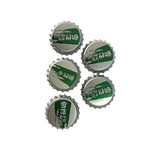
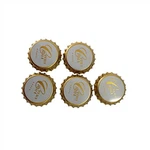
Crown Cap
Your Professional Crown Cap Supplier
Zhejiang Xinye Packing Co.,Ltd, which consists of metal decoration, PVC-free pellet production and crown caps production, is a professional crown cap manufacture enterprise. Now it has three wholly owned subsidiaries(that is: Wuhan Xinye Packing Co, Ltd, Changchun Xinye Packing Co., Ltd, Deqing County H&S Sealing Material Co, Ltd).
Production Capacity
The company has a total registered capital 103.5million Yuan(RMB), total area 175 mu, existing staff 410 people, theoretical production capacity of 21.6 billion crown caps per year, printing and coating capacity 50000 tons, and PVC-free pellet production capacity 8640 tons per year.
Sales Market
Since 2018, we have started to enter the overseas market and achieved good results in the Southeast Asian market: Vietnam, Myanmar, Laos, Malaysia and so on. And our Market is constantly expanding recently, including South Asia, Africa, And Eastern Europe...
On-Time Delivery
After you made the payment, We will produce as soon as possible according to your requirements, we promise that the order will be delivered on the agreed date.
Production Equipment
The company has more than ten domestic advanced computer numerically controlled Crown production lines and several PMC injection molding machines, with an annual production of more than 20 billion caps of various specifications.


|
Liner(pvc-free) |
PVC FREE |
|
Corrugation |
21 |
|
Sheet thickness |
0.20-0.21mm |
|
External diameter |
32.1±0.2mm |
|
Height |
5.93-6.06mm |
|
Feature |
Non Spill |
|
Colors |
According to your request |
Types of Crown Cap
The crown caps produced by our company mainly include the following types:
Standard Pry-Off Crown Caps
This is the most common type of crown cap. As the name suggests, these caps require a bottle opener to be removed. The opener levers the cap off the bottle neck by bending the flanged edge. This type is widely used for many traditional beer bottles and some soda varieties.
Twist-Off Crown Caps
These crown caps are designed with slight indentations or scoring on the flanged edge. This modification allows the cap to be removed by simply twisting it by hand, without the need for a separate bottle opener. While convenient, they might not offer the same level of tamper evidence as pry-off caps.
Oxygen Barrier Crown Caps
For beverages that are sensitive to oxygen, such as beer, oxygen barrier crown caps are crucial. These caps feature specialized liners with enhanced oxygen barrier properties. This minimizes the amount of oxygen that can permeate through the cap and into the bottle, helping to maintain the freshness, flavor, and overall quality of the beverage over a longer shelf life.
Different Colors and Designs
Crown caps are available in a vast spectrum of colors. Furthermore, they can be printed with various designs, logos, and branding elements. This allows beverage companies to create visually appealing packaging, differentiate their products, and build brand recognition. You'll often see different colored caps used to distinguish between different flavors or product lines within the same brand.
Superior Seal Integrity
Crown caps provide an exceptionally tight and reliable seal that is both airtight and leak-proof. This is crucial for preserving the carbonation in beverages like beer, soda, and sparkling water, ensuring they retain their desired fizz. The tight seal also effectively prevents oxidation, which can degrade the quality and flavor of the contents, especially important for beverages like beer.
Cost-Effectiveness
Crown caps are relatively inexpensive to manufacture, particularly when produced in large volumes. This makes them a highly economical option for beverage producers, especially for high-volume products.
Tamper Evidence
Crown caps inherently offer tamper evidence. Once applied, they cannot be removed without visibly bending or distorting the metal. This provides a clear indication to consumers that the bottle has not been previously opened, ensuring product safety and integrity.
Versatility
While their primary application is within the beverage industry, particularly for beer bottles, crown caps can also be found on some other niche products requiring a secure and tamper-evident seal.

Applications of Crown Cap
Beer Industry
Crown caps have a long and storied history with beer packaging and remain the dominant closure choice for beer bottles worldwide. For many, the satisfying "pop" of a crown cap being opened is synonymous with cracking open a cold beer. Their ability to provide a superior seal, crucial for maintaining carbonation and preventing oxidation, coupled with their cost-effectiveness for large-scale production, makes them an ideal solution for breweries of all sizes.
Soda and Carbonated Beverages
Beyond beer, crown caps are also utilized for sealing certain types of soda and other carbonated beverages. The need to maintain the fizz and prevent leaks makes crown caps a suitable option for these drinks as well, although screw caps have gained significant popularity in this segment in recent years.
Other Niche Applications
While beer and soda constitute the vast majority of crown cap usage, they can occasionally be found in other niche applications. These might include certain types of cider, some brands of bottled water (particularly those aiming for a more traditional or retro aesthetic), and even some specialized food products packaged in glass bottles requiring a strong, tamper-evident seal.
Crown Cap Surface Treatment Type
Tin plating
This is a common surface treatment method. Tin is plated onto the surface of the crown cap through an electroplating process. Tin - plated crown caps have good corrosion resistance, can effectively prevent the cap from rusting, and have a certain decorative effect. At the same time, tin plating also has good solderability, which is beneficial for subsequent processing and use.
Chrome plating
Chrome plating can give the crown cap a bright and shiny appearance, enhancing its decorative properties. In addition, chrome - plated crown caps have better wear resistance and corrosion resistance, which can improve the service life of the caps. Chrome - plated surfaces are also relatively easy to clean and maintain.
Painting
Crown caps can be painted with different colors of paint to meet different aesthetic and brand - positioning requirements. Paint can provide a variety of colors and finishes, such as matte, glossy, etc. This surface treatment can not only beautify the appearance of the cap but also play a role in protecting the metal substrate to a certain extent, preventing it from being corroded by the outside environment.
Powder coating
Powder coating is to spray powder - like coating materials onto the surface of crown caps and then cure them at high temperatures. Powder - coated crown caps have a relatively thick coating, which has good wear resistance, impact resistance, and corrosion resistance. This treatment method can also achieve a variety of colors and textures, providing a rich selection of appearances.
Embossing and debossing
These are not traditional surface treatment methods in the strict sense, but rather processes for creating patterns or text on the surface of crown caps. Embossing involves raising the pattern or text above the surface, while debossing creates an indentation. These techniques can enhance the visual and tactile effects of the crown cap, making it more distinctive and in line with the brand image.
Customizable Options for Crown Caps
Material
Size
Color
Surface Finish
Logo and Printing
Closure Mechanism
Packaging and Shipping
30000000pieces per day
Port: Shanghai or Ningbo
Lead time: 25-30days
|
Packaging |
10,000pcs/carton. First, white poly bag, then packed in carton. |
|
Shipping |
Support variety methods of shipments, such as by DHL/Fedex/UPS, by air, by sea, by train door to door. |
Our Factory
Zhejiang Xinye Packaging Co., Ltd. is one of the largest crown cap manufacturers in China, and the sales volume of crown caps has ranked among the top two in the country for many years.

Our Certificates
In November of 2000, the company obtained IS09002 quality system certification, and further in December 2002, it passed thelS09001:2000 certification; On August 16 of 2010, it passed the HACCP-EC-01:2005 food safety management system certification.


